For a long time, the conversation around men’s summer fashion was incredibly limited. When the temperatures began to rise, the standard routine was simply to take whatever trousers or jeans a man was wearing and cut them off at the knee. However, menswear has evolved massively, and by 2026, the construction, anatomy, and variety of men’s summer shorts have become just as complex and intentional as women’s dresses or bespoke winter coats.
The most significant shift in modern summer clothing is the absolute rejection of the “one size fits all” approach to silhouettes. A few years ago, the trend leaned heavily toward ultra-short, tight-fitting shorts. Today, the pendulum has swung back, offering a wide spectrum of inseams, fabric weights, and structural cuts. The modern man’s summer wardrobe is no longer just about staying cool; it is about choosing the right garment architecture for the right environment.
Understanding the anatomy of different shorts is crucial. The way a waistband is constructed, the weight of the fabric, the length of the inseam, and the type of pocket stitching completely alter how the garment hangs on the body. A heavy denim fabric will stack and hold its shape, while a lightweight linen will drape and flutter.
If you want to build a highly functional and visually interesting summer wardrobe, you need to understand the physical differences between the garments available to you. Here is a detailed breakdown of the 10 distinct types of men’s summer shorts that define the 2026 fashion landscape.
1. The Traditional Oversized Board Short
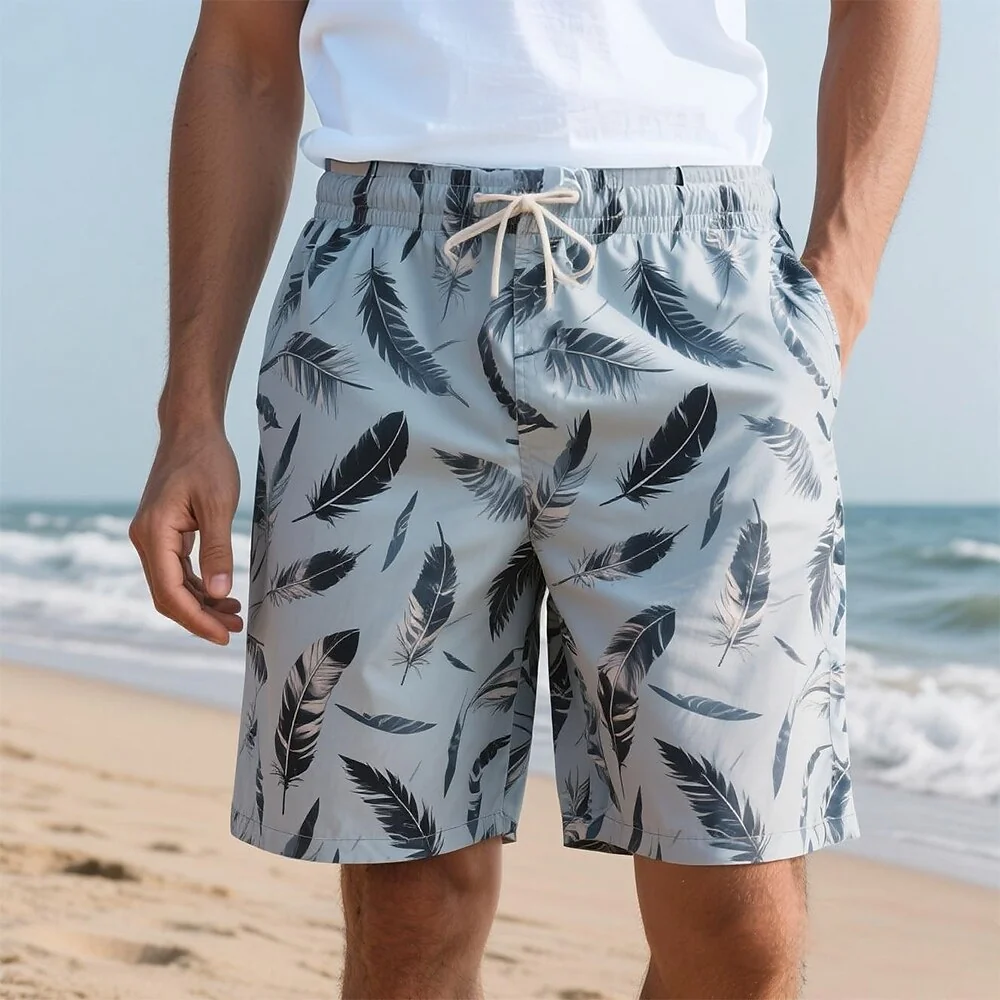
The oversized board short is arguably the most dominant summer silhouette of 2026. Structurally, this garment is completely unique because it lacks a standard elastic or button-fly waistband. Instead, it features a rigid, flat front with a traditional lace-up surf closure and a velcro fly.
The anatomy of this short is designed for maximum coverage and mobility. The inseam is deliberately long, usually measuring between 10 to 12 inches, allowing the hem to rest right at or slightly below the kneecap. The leg opening is cut wide, providing a loose, unrestrictive block of fabric around the thighs. Typically constructed from quick-drying, non-stretch nylon or recycled polyester, the fabric is thin but highly durable. You will rarely find side-seam pockets on authentic board shorts; instead, they usually feature a single patch pocket on the back or lower thigh, complete with a drainage hole for water.]
2. The Tailored Pleated Short

Moving away from the beach and into the realm of architectural menswear, the tailored pleated short is a masterclass in garment construction. This short takes the top block of a formal dress trouser and simply abbreviates the leg.
The defining characteristic here is the inclusion of pleats—either single or double—stitched just below the front waistband. These folds of fabric are not just decorative; they physically expand when the wearer sits or moves, providing extra room in the hips and thighs while maintaining a sharp, clean line down the front when standing still. The waistband often features an extended tab closure with a hidden hook-and-bar fastener, eliminating the need for a bulky front button. These are usually cut from slightly heavier, high-quality fabrics like wool-linen blends, gabardine, or heavy cotton twill, which allows the pleats to hold a sharp crease.
3. The Heavyweight Denim Jort

The word “jort” (jean short) used to carry a negative connotation, but its 2026 iteration is a highly structured, heavy-duty garment. The modern denim jort is defined by its sheer weight and massive proportions.
Unlike the slim-cut denim shorts of the past, this type features a relaxed, baggy block. The pattern is cut straight down from the widest part of the hips, creating a wide-leg cylinder that usually hits below the knee. The construction includes standard five-pocket denim detailing: heavy copper rivets at the stress points, a coin pocket, wide belt loops, and a thick leather patch on the back waist. The hem is a defining feature; it can either be cleanly finished with a thick chain stitch or left completely raw and frayed. Because heavy denim (often 12oz to 14oz weight) has zero stretch, the oversized cut is mechanically necessary to allow for walking and bending.
4. The Pure Linen Drawstring Short

When the humidity reaches its peak, structure takes a backseat to pure breathability. The pure linen drawstring short is the most lightweight garment on this list, relying entirely on the natural properties of flax fibers.
Linen is incredibly porous, meaning air flows through the garment with zero resistance. Structurally, these shorts are very simple. They feature a gathered, fully elasticated waistband threaded with a thick cotton or linen drawcord. The absence of a rigid waistband, zippers, or metal hardware keeps the overall weight of the garment incredibly low. The cut is usually mid-length, with an inseam of about 6 to 7 inches, allowing the fabric to drape naturally over the mid-thigh. Because linen lacks natural elasticity, the cut is moderately loose to prevent the seams from tearing during movement.
5. The Crinkle Nylon Cargo Short

The cargo short has been completely redesigned for 2026, ditching the heavy, bulky cotton of the early 2000s in favor of lightweight, technical fabrics. The modern utility cargo is cut from crinkle nylon—a synthetic fabric that has a distinct, paper-like texture and a matte finish.
The anatomy of this short is built entirely around functional storage. The side cargo pockets are constructed as “bellows pockets,” meaning they have extra folds of fabric sewn into the sides that allow them to expand outward when filled, but lay completely flat when empty. The closures often feature hidden snap buttons or waterproof zippers instead of traditional velcro. Furthermore, the crotch usually features a diamond-shaped gusset—an extra panel of fabric sewn into the seam—which drastically increases the garment’s range of motion and durability.
6. The Integrated Belt Climbing Short

Originally designed for mountaineers, the climbing short has crossed over into everyday summer fashion due to its indestructible construction and unique waist mechanics.
The most defining feature of this garment is the built-in belt system. A heavy-duty nylon webbing belt is sewn directly into the waistband tunnel, emerging at the front to clasp with a mechanical plastic or magnetic buckle. This allows the wearer to tighten the shorts instantly with one hand. The fabric is usually a heavy cotton canvas or a ripstop blend, featuring a grid-like weaving pattern that stops tears from spreading. The pockets are often cut exceptionally deep to prevent items from falling out during high physical activity, and the overall fit is slightly boxy and rugged.
7. The Seersucker Short

The seersucker short is a garment defined entirely by the unique physical properties of its fabric. Seersucker is a specialized cotton weave that groups threads together in a way that creates alternating stripes of smooth and puckered (wrinkled) fabric.
This puckered texture is not just for show; it serves a mechanical purpose. The wrinkled stripes physically lift the fabric away from the skin, creating microscopic pockets of air that facilitate heat dissipation. Because the fabric itself does all the heavy lifting regarding temperature control, the cut of the short is usually quite traditional. It often mimics the anatomy of a standard chino short, featuring a flat front, slanted side-seam pockets, and rear welt pockets. The inseam generally sits right above the knee, offering a clean, classic block.
8. The Terry Cloth Resort Short

Terry cloth is the exact same looped cotton fabric used to make high-end bath towels, and it has found a permanent home in modern summer clothing. The terry cloth resort short is designed for ultimate softness and moisture absorption.
The fabric is constructed by weaving extra yarn into tiny, protruding loops that cover the entire surface of the garment. This makes the shorts slightly thicker than standard cotton but incredibly plush. Structurally, these shorts usually feature a retro, slightly abbreviated block with a 5-inch inseam. The waistband is elasticated, and the edges of the shorts are often finished with contrasting fabric piping that runs down the side seams and around the curved hems, heavily referencing 1970s athletic wear.
9. The Double-Layer Mesh Athletic Short

Athletic shorts are no longer restricted to the gym. The 2026 iteration of the mesh short focuses heavily on vintage basketball silhouettes.
These shorts are constructed using two distinct layers of fabric. The outer layer is a heavy, open-hole polyester mesh, which provides extreme ventilation. Because this outer layer is virtually see-through, a solid, softer micro-mesh lining is sewn underneath for complete opacity. The waistband on these shorts is usually incredibly thick, featuring multiple rows of heavy stitching that gather the elastic tightly. The leg openings are wide, and the side seams usually feature deep V-shaped vents at the bottom hem, which completely removes any tension on the fabric when the wearer takes a wide stance.
10. The Relaxed Twill Chino Short

The chino short is the baseline of men’s summer clothing, but its cut has evolved. The skinny, tight-fitting chinos of the past decade have been entirely replaced by the relaxed twill short.
The anatomy of this garment is based on a sturdy cotton twill fabric, which features a distinct diagonal weaving pattern that gives it a slight sheen and immense durability. The construction is very clean: it features a rigid waistband with belt loops, a standard zipper fly, and a horn or resin button. What makes the 2026 version different is the block. The fabric falls completely straight down from the widest part of the hips, rather than tapering inward toward the thigh. This creates a wider, more relaxed cylinder of fabric around the leg, allowing for air circulation while maintaining a structured, formal appearance.
Final Thoughts on Men’s Summer Shorts
Building a summer wardrobe is no longer a guessing game. It is about looking closely at the anatomy of the clothing you are buying. Every detail, from the puckered weave of seersucker to the heavy brass rivets on a denim jort, serves a specific mechanical and visual purpose.
By understanding the distinct types of shorts available, you can make informed decisions based on your environment. You will know that crinkle nylon is perfect for a humid, active day, while tailored pleats are the exact structure you need for a sharp evening event. Recognizing these 10 distinct types of shorts ensures that you are not just throwing on any piece of fabric to beat the heat, but choosing a well-constructed garment designed exactly for the occasion.

